Building the Online Home the Fire Service Did Not Yet Have
Some opportunities arrive through a carefully developed business plan. Others begin with a phone call you almost dismiss.
In the mid-1990s, I built a website for my own fire department. Fire department websites were still unusual, and there was no established playbook for what one should include or how it should work. I was not trying to transform an industry. I saw something my department needed, had an idea and built it.
That pattern would repeat throughout my career.
One day, I received a call from a battalion chief in Charlottesville, Virginia, who also wrote for Firehouse Magazine. He had seen the website I created for my department and liked what he saw. He asked whether I could put together something for him to review within a few days.
My first answer was essentially, no way.
A few hours later, I emailed him back with the initial concept for what would become Firehouse.com.
That call defined a significant part of my career.
The Fire Service Needed a Central Online Home
It can be difficult to remember how different the internet was at the time. There were no social networks connecting the fire service. Online ecommerce was in its infancy. Industry conversations happened in magazines, at conferences, around firehouse kitchen tables and through personal relationships built over many years.
The fire service had information, expertise, traditions and strong opinions. What it did not have was one central online place that could bring those things together.
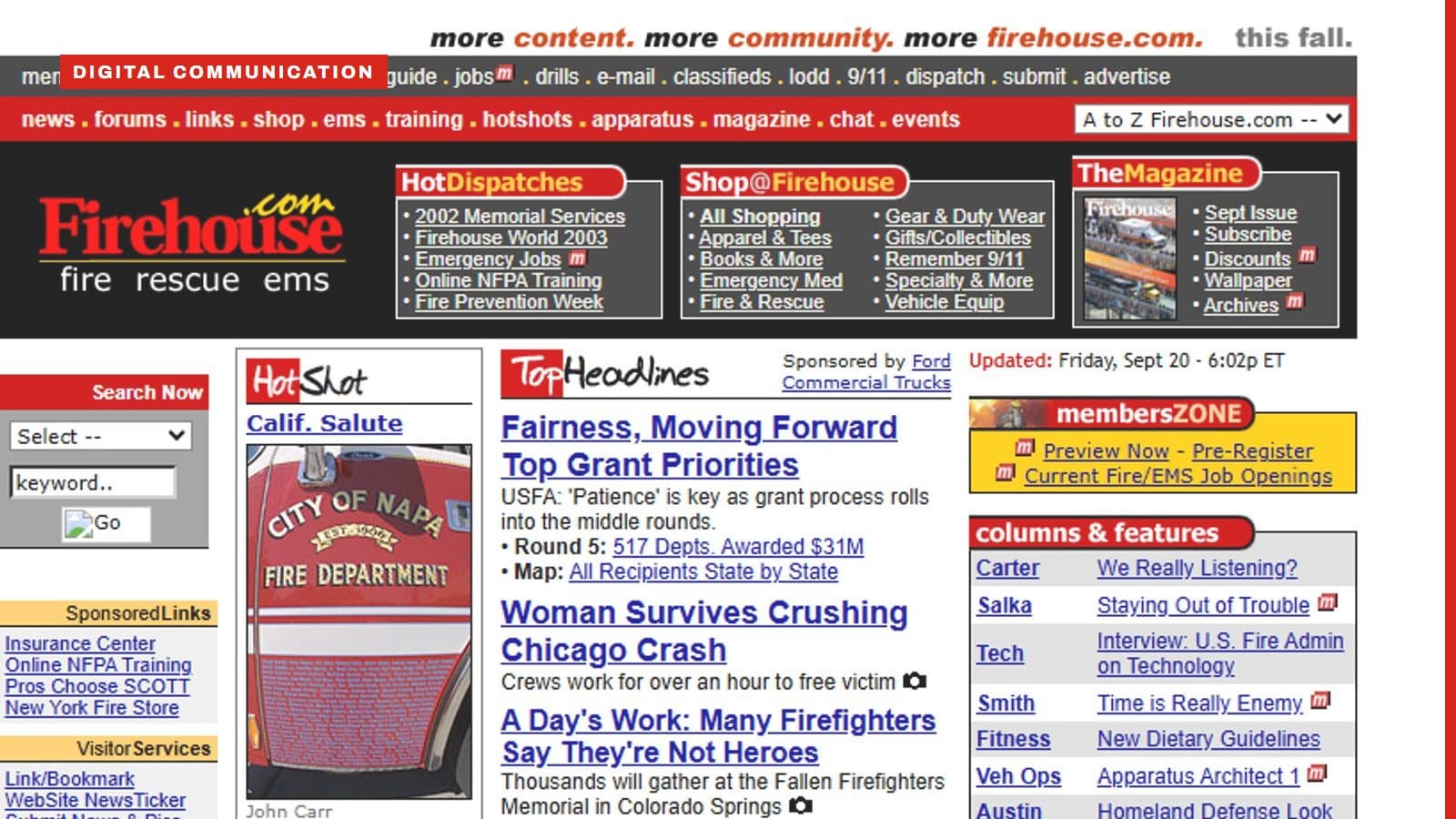
Firehouse.com grew into that place.
It became a destination for news and information across the fire service. It created a central forum where firefighters, officers, chiefs and others could discuss the issues affecting their departments and the industry. It provided a place to recognize and honor fallen firefighters. It introduced ecommerce opportunities at a time when purchasing fire-service products online was still a new concept.
The goal was not simply to put a magazine on a computer screen. The opportunity was to use the internet to do things that print could not do by itself. We could connect people, update information more quickly, create searchable resources and give the fire service a place to gather regardless of geography.
Expanding Beyond the Fire Service
The underlying need was not limited to firefighters.
Law enforcement professionals also needed a central online destination for news, information, products and discussion. That opportunity led to Officer.com. The concept also expanded further into the EMS community.
Each audience had its own identity, needs and culture. At the same time, they shared a desire for trustworthy information and a place to connect with people who understood their work.
Those early online communities taught me that technology works best when it respects the community it is intended to serve. You cannot simply create a generic platform, add public-safety terminology and expect people to embrace it. You have to understand how they communicate, what they value and why they would make the platform part of their routine.
Right Place, Right Time and a Willingness to Act
It would be easy to retell this as a story about recognizing the future of the internet before everyone else. That would not be entirely honest.
Skill and ideas mattered. Experience in the fire service mattered. Building that early department website mattered. But being in the right place at the right time mattered just as much.
The battalion chief had to find the site. He had to make the call. The internet had to be reaching the point where an industry platform was possible. Firehouse Magazine had to be willing to explore what the web could become.
My role was to recognize the opportunity and act on it, even after initially saying it could not be done.
That may be the most important entrepreneurial lesson in the story. You do not always have advance notice that a career-defining opportunity has arrived. Sometimes it sounds like an unreasonable request from someone you have never met. Sometimes your first instinct is to say no. What matters is whether you keep thinking after the call ends.
The Same Instinct Still Drives Me
Many of the things I have built began with a need I could see inside my own department or across public safety. We needed better websites. We needed better recruitment marketing and a way to track prospective members. We needed better tools for communication, reporting and department management.
The technology has changed dramatically since the mid-1990s. The basic process has not.
Listen closely to the people doing the work. Find the gaps that established products have ignored. Build something useful. Then accept the responsibility that comes when people begin depending on it.
I could not have predicted everything that followed when I returned that phone call with an idea a few hours later. I only knew there might be something worth showing.
Sometimes that is enough to begin.
Tools for this topic
Free interactive tools to put this into practice.
 Part of the seriesWebsites & Digital PresenceExplore the series
 Recent posts
All posts →