How to Put On a National Night Out the Community Shows Up For

National Night Out is one of the best community-building nights on the calendar, and the best versions of it feel less like a safety briefing and more like a block party the whole town wants to attend.
It is a police-led, community-first event. In most places it is organized by the police department, a sheriff's office, or a community safety coalition working hand in hand with neighborhood associations. The whole idea is simple and powerful: for one night, neighbors come outside, meet each other, and meet the people who serve them. Everything good about a National Night Out flows from keeping that goal front and center. It is about the community first, with public safety woven through it.
So the real question is not who runs it. It is what makes one worth showing up for.
Decide on the Shape of Your Night
National Night Out can take a few forms, and the strongest programs often run more than one at the same time.
The classic version is neighborhood block parties spread across the jurisdiction, sometimes a dozen or more on the same evening, with agencies rotating through to visit each one. Officers, deputies, firefighters and medics stop by, say hello, let the kids climb on the apparatus, and move on to the next street. It is personal and local, and it puts public safety right in the neighborhood where people live.
The other version is a single large anchor event: one big gathering in a central, easy-to-reach spot that draws the whole area. Done well, this becomes the event people circle on the calendar.
You do not have to choose. The best programs I have seen do both, small neighborhood gatherings for intimacy and reach, plus one marquee event for scale.
What a Great One Actually Includes
A patrol car and a fire engine parked next to a folding table is not an event. Give people reasons to come and reasons to stay.
The ingredients that make a National Night Out land:
- A genuine mix of agencies and community organizations, not just one or two. Police and sheriff, fire and EMS, plus public works, parks and recreation, animal control, code enforcement, the local hospital or health department, and regional partners like a state police unit or an aviation team.
- Community organizations and local businesses: neighborhood associations, youth sports leagues, scouts, churches, nonprofits, and sponsors who help cover the cost.
- Things to do, not just things to look at. Hands-on demonstrations, a K-9 unit, rescue tool displays, vehicle extrication, a chance to sit in the cab or tour an ambulance.
- Real draws for families: food trucks, music, costumed mascots, classic car displays, giveaways, and if you can get one, a helicopter on display always stops people in their tracks.
- Simple, seasonal safety messaging delivered to people who are already having a good time: fire escape planning, checking smoke alarms, safe routes back to school, hands-only CPR.
Make it a party first. The safety message still gets through, and it gets through better because nobody feels lectured.
A Great Example Close to Home
I have watched this done really well in my own community. The Hanover County, Virginia Sheriff's Office does a terrific job with National Night Out. On the night itself, their people are out participating in neighborhood gatherings across the county, exactly the personal, local presence that makes the evening work.
Then they go bigger. They host a large weekend daytime event in the parking lot of a local sporting goods store that pulls in dozens of county agencies and community organizations. There is a helicopter, food trucks, demonstrations, classic cars, costumed mascots, and much more. It is genuinely well attended, the kind of event families plan their day around. It is a great example of what happens when a lead agency treats National Night Out as a real community celebration and invites everyone to the table.
That is the bar worth aiming for: not a few booths sharing a lot, but a day and a night the community actually shows up for.
Coordinate So It Feels Like One Effort
The difference between a scattered set of booths and a single community event is coordination.
If you are organizing, build a shared calendar of every block party and gathering so you know how to divide coverage, and no cul-de-sac ends up with three trucks while the next street gets nobody. Line up a single point of contact per agency for quick decisions the week of. Agree on what each participant is bringing so every stop feels full instead of thin. And bring in the community organizations early, because they are the ones who get their neighbors to actually come.
If you are participating rather than leading, make it easy on the organizer. Show up when and where they need you, bring something engaging, and encourage your people to walk around and talk to neighbors instead of standing by the vehicle all night.
Turn One Night Into Year-Round Goodwill
The value does not end when the last table folds up.
Collect what you learned: which neighborhoods turned out, which ones barely did and why. Thank the hosts, the sponsors, and the community groups who made it happen. Share photos afterward and tag every partner, because that reinforces the same message the event sends in person: this is one community, and everyone who serves it showed up together.
Do it well and National Night Out stops being a single evening in August. It becomes the night your community remembers all year, and the reason your neighbors already know your name the next time you show up.
Tools for this topic
Free interactive tools to put this into practice.
 CalculatorOpen-House Budget Calculator
 BuilderOpen-House Planner
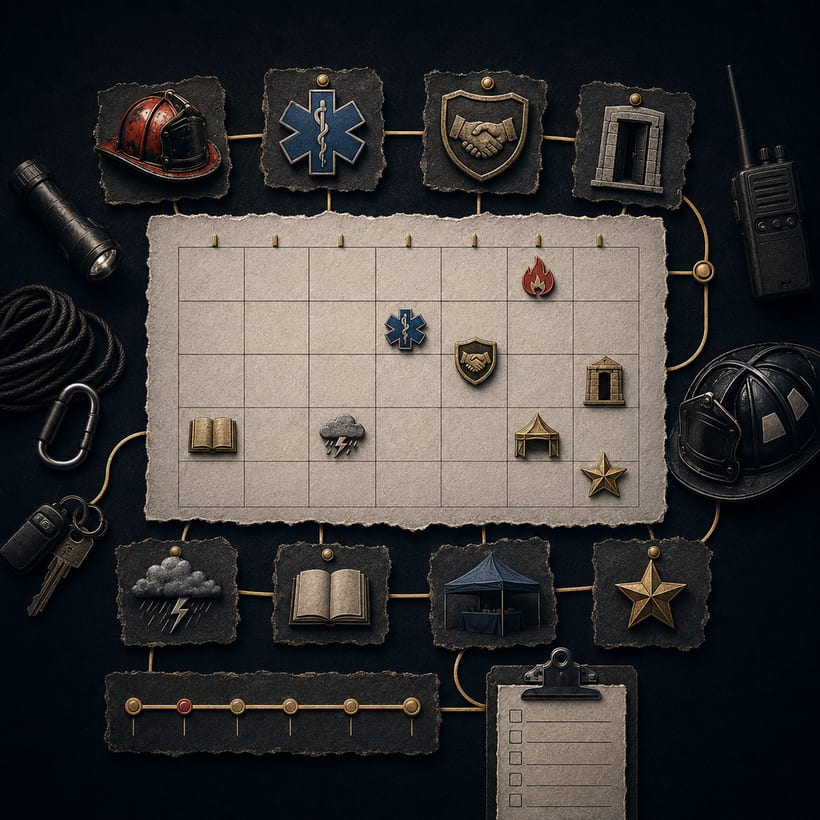 BuilderCommunity Engagement Calendar Builder
 Part of the seriesEvents & CommunityExplore the series
 Recent posts
All posts →