Public Safety Vendors Need to Spend More Time in the Station
Public safety companies spend a great deal of time talking about being close to the customer.
They conduct surveys, review support tickets, schedule advisory calls and hire people with field experience. All of that can help.
It is not the same as spending time where the product is used.
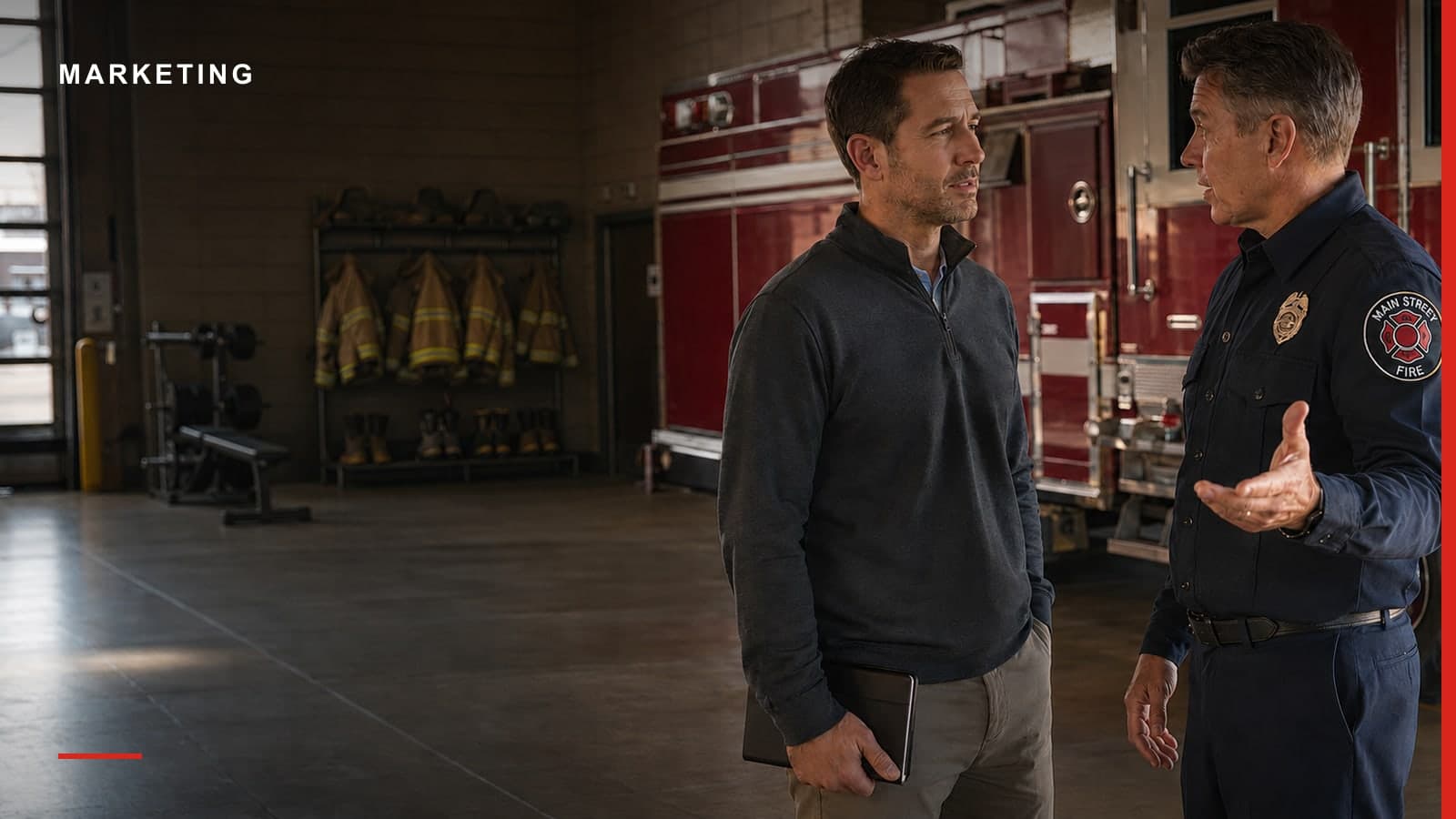
A station visit exposes the interruptions, workarounds, shared responsibilities and environmental details that do not appear in a feature request. It allows a product manager, marketer or executive to see whether the system fits the operation or asks the operation to fit the software.
Field Experience Inside the Company Is Not Enough
Hiring firefighters, EMTs, dispatchers or law enforcement professionals brings valuable knowledge into a company.
That experience also comes from a particular agency, role and period of time. One person's background should inform the work without becoming a substitute for continued research.
Public safety organizations differ by size, geography, governance, staffing, budget and local practice. The company still needs to listen across the market.
Watch the Entire Workflow
A user may describe a task accurately and still omit the parts that feel too ordinary to mention.
Watch what happens before and after the product. Where does the information originate? Who checks it? Which spreadsheet remains open? Who receives a text when something fails? What does the administrator do later to prepare the report?
The product may support the visible task while leaving several manual handoffs untouched.
Observe routine work and exceptions. The exception often explains why the department created a workaround.
Meet the Administrator After the Sale
The buying committee and frontline user receive much of the vendor's attention. The person administering the system can reveal a different experience.
Administrators manage data quality, permissions, onboarding, reports, integrations and recurring questions. They learn which capability required more effort than expected and which configuration nobody documented.
Talk with them after 30, 60 and 90 days. Ask what they would change if implementing again. That conversation can improve the product, sales process and training at the same time.
See the Product on the Device Actually Used
A workflow that looks good on a large demonstration screen may fail on a phone in a station bay.
Test the product on department hardware, shared displays and ordinary networks. Watch someone use it while other responsibilities compete for attention.
Public safety software is not always used by a person seated quietly at a desk. Design decisions should reflect the real setting.
Bring More Than Product Staff
Station exposure is valuable for marketing, sales, implementation, support and company leadership.
Marketers hear the language users employ and the outcomes they value. Salespeople understand the difference between a product objection and an operational constraint. Support staff see why a confusing workflow generates recurring tickets. Executives understand where investment matters.
The visit should not become a parade of vendor employees distracting the department. Keep the group appropriate and the purpose clear.
Do Not Turn Every Visit Into a Sales Call
If every conversation becomes a demonstration or renewal discussion, users will stop speaking honestly.
Create room to observe, ask questions and hear criticism without immediately defending the product. Explain what the company is trying to learn.
Do not promise a feature in response to every frustration. Record the need, investigate how widely it applies and follow up honestly.
The department should receive value too. Share useful findings, configuration improvements or training resources when appropriate.
Include Different Departments
The largest and most enthusiastic customers are convenient research partners. They should not define the entire market.
Visit small volunteer departments, combination systems, large career agencies, independent EMS organizations and other relevant structures. Include customers with limited administrative staff and those using several integrations.
Talk with organizations that struggled during implementation, not only the references already selected for prospects.
Differences among departments help reveal which product assumptions are local and which needs are common.
Respect the Environment
The station is a workplace, home base and operational facility. Visits must respect calls, schedules, privacy and security.
Coordinate expectations. Obtain permission before recording, photographing or accessing systems. Do not expose patient, personnel or incident information.
Be prepared for the visit to change when the department gets busy. That disruption is part of understanding the environment.
Turn Observation Into Action
Field visits create little value if notes remain with the people who attended.
Document workflows, observations, questions and evidence. Separate individual preferences from recurring problems. Share findings with the teams responsible for product, training, documentation and messaging.
Close the loop with the department. Explain what was learned, what may change and what will not. Trust grows when participants see that their time mattered.
Stay Close After the Market Changes
Public safety work, standards, funding and technology continue to change. Knowledge gained five years ago can become a source of false confidence.
Build ongoing field exposure into the company's operating rhythm. Combine station visits with advisory groups, implementation reviews, support analysis and customer data.
The goal is not to visit often enough to claim the company listens. It is to keep the people building and selling the product connected to the people carrying the responsibility.
Public safety vendors need more than customers. They need context.
For the reporting and observation principles behind that approach, read What Journalism Taught Me About Building Public Safety Products.
Tools for this topic
Free interactive tools to put this into practice.

 Part of the seriesVendor EvaluationExplore the series
 Recent posts
All posts →