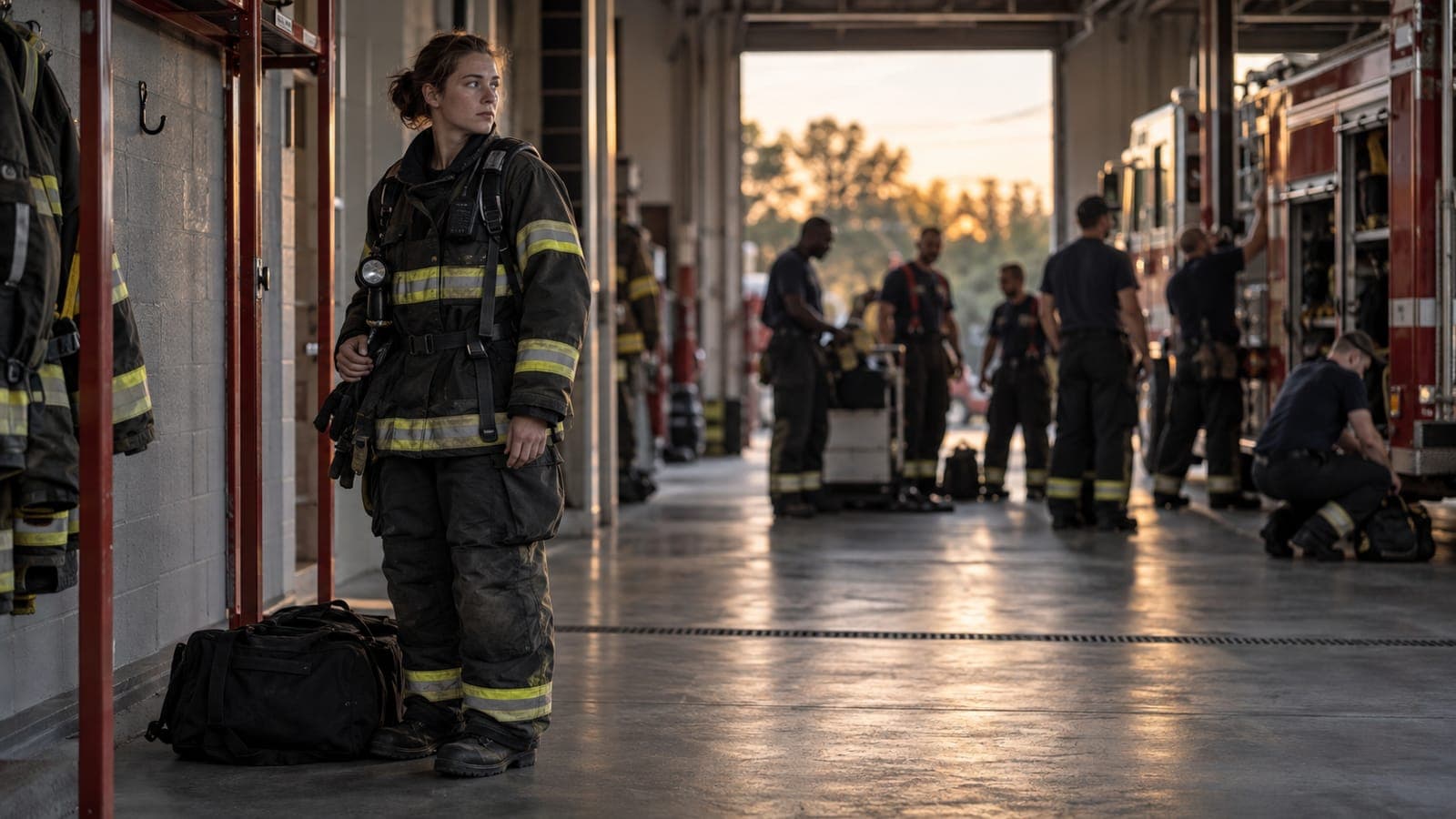
The Officer Is Your Communication Hub

Chiefs and directors like to think of communication as something that flows from the top of the organization down to the floor. It does not work that way, and it never has.
It flows through the first-line supervisor. The company officer. The sergeant. The field supervisor or shift lead. Whatever the title is in a given discipline, that person is the actual hub through which almost everything administration wants the floor to know has to pass, and through which almost everything the floor wants administration to know has to pass back.
Skip that hub, or leave it poorly equipped, and it does not matter how good your messaging is at the top. It dies somewhere between the chief's office and the apparatus bay, the patrol briefing room, or the ambulance bay.
Why It Concentrates There
Think about how information actually moves in a fire company, a patrol squad or an EMS crew. Members do not read every departmental memo closely. They do not attend every command staff meeting. What they do is trust, or not trust, the person who runs their shift day to day. When that person explains a change, members listen differently than they do to an email from three levels up that they have never met in person.
The same concentration happens in reverse. A firefighter who has a problem with equipment, a paramedic who thinks a protocol is unsafe in practice, an officer who is burning out and thinking about leaving: none of them typically walks that concern straight to the chief. They tell their sergeant, their company officer, their field supervisor, because that is the relationship that exists day to day. If that supervisor does not pass it up, or does not know how to, administration never hears about it until it becomes a resignation, a grievance or a bad outcome.
This is true across fire, EMS and police in roughly the same shape, even though the rank structure and terminology differ. Wherever there is a person who runs a shift and sees the same small group of people regularly, that person becomes the actual communication hub of the organization, whether anyone designed it that way or not.
Most Agencies Never Equip That Role
Here is the gap I see constantly. Agencies invest in leadership training for command staff. They invest, sometimes, in operational and tactical training for first-line supervisors. They rarely invest anything in that supervisor's ability to communicate, in both directions, as a defined part of the job.
An officer gets promoted because they were a strong operator, a solid medic, a good street cop. None of that guarantees they know how to explain a policy change in plain language, run a briefing that people actually retain, or recognize when a quiet crew member is sitting on a problem instead of a compliment. Communication is treated as something a supervisor either naturally has or does not, instead of a skill the agency should actually build and expect.
That is a mistake, because the cost of getting it wrong is not abstract. A poorly explained protocol change gets followed inconsistently. A safety concern that never makes it up the chain becomes a preventable injury. A member who feels unheard for long enough stops raising concerns at all, and you lose visibility into your own organization exactly where you need it most.
What to Actually Equip Officers to Do
Start by naming the expectation directly. A first-line supervisor's job includes making sure their people understand what they need to know and making sure administration hears what it needs to hear. That is not an informal nice-to-have. It is part of the role, and it should be said out loud, not assumed.
From there, a few things make a real difference:
Give them the why, not just the what. An officer who only receives the bullet points of a policy change will deliver bullet points, and bullet points do not answer questions. Brief supervisors on the reasoning behind a change before it reaches the floor, so they can actually explain it instead of just repeating it.
Give them a real forum, not a hallway conversation. Roll call, shift briefing, squad meeting, whatever the discipline calls it: protect that time and use it deliberately, instead of letting it get eaten by logistics every single day. A supervisor who only gets ninety seconds before the trucks roll cannot brief anything of substance.
Train the skill directly. How to explain a change in plain language. How to run a briefing that invites a question instead of shutting one down. How to notice when someone has gone quiet who is usually not quiet. These are learnable, and treating them as unteachable instinct is how agencies end up with operationally excellent supervisors who cannot run a five-minute briefing that anyone remembers.
Give them a real path upward. If a supervisor raises a concern from the floor and it disappears into the organization with no acknowledgment, they stop raising the next one, and so does everyone below them. Close the loop. Even a short response of "heard, here is what we are doing about it" keeps the channel alive.
The Cost of Leaving This Informal
When the hub role is left informal, it becomes entirely dependent on who happens to hold it. One officer runs a tight briefing, checks in with quiet members, and pushes concerns up the chain without being asked twice. The next officer in the same seat does none of it, not out of bad intent, but because nobody ever told them it was part of the job or showed them how.
That inconsistency is expensive. It means the quality of internal communication in your organization varies by shift, by squad, by company, depending entirely on individual habit rather than organizational design. A member's experience of whether they are informed and heard should not depend on the luck of which supervisor they happen to work under.
Build the Hub Deliberately
Administration sets policy and direction. The floor does the work and lives with the consequences of both. The first-line supervisor stands in the middle of that relationship every single day, whether the organization acknowledges it or not.
Equip that role on purpose. Train the communication skill, protect the time it requires, and build a real path for information to travel back up, not just down. Do that, and the rest of your internal communication gets dramatically easier, because the hub that was always going to carry it is finally built to hold the weight.
Tools for this topic
Free interactive tools to put this into practice.
 AssessmentInternal Communications Health Check
 BuilderDashboard Content Planner
 BuilderCommunication Channel Mapper
 Part of the seriesInternal CommunicationsExplore the series
 Recent posts
All posts →