What Chief Donald "Doc" Moltrup Meant to Me
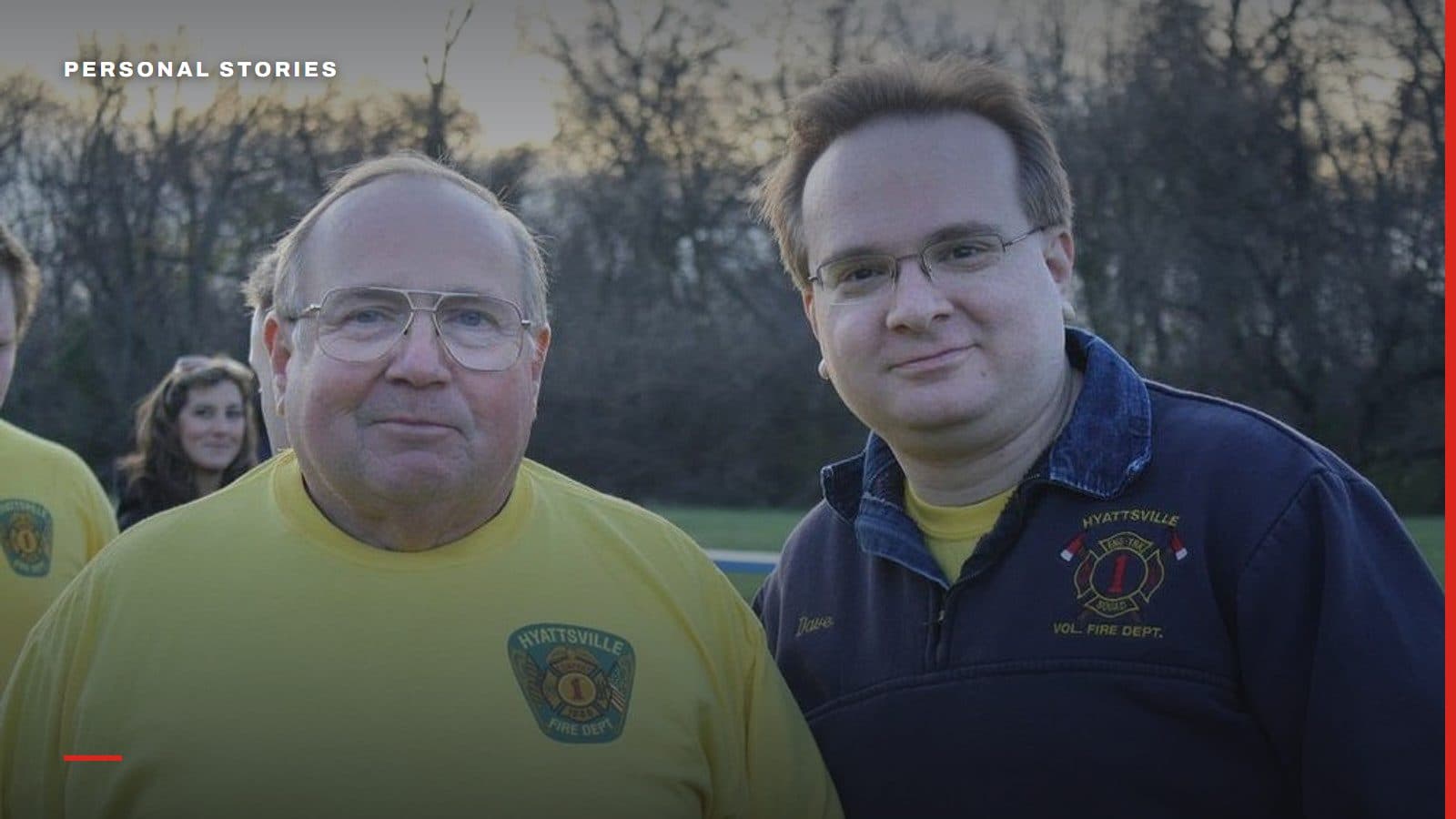
The letter that changed my life, and the chief who never gave up on me
I still have the letter.
After all these years, through every move, every change of direction and every chapter of my life, I have held onto it. The paper is old now, but what it represents has never faded.
I was 12 years old when I heard the sirens outside my home and felt something I did not yet understand. It was a pull, toward the firehouse, toward service, toward a sense of purpose I could feel long before I could put it into words.
So I wrote a letter to the Hyattsville Volunteer Fire Department. A real letter, dropped in the mail by a kid with no idea who might read it or whether anyone would answer.
Chief Donald “Doc” Moltrup read it.
And he wrote me back.
That may sound like a small thing. It wasn’t.
A busy fire chief could easily have set aside a letter from a 12-year-old. He could have sent a polite, forgettable reply, or no reply at all. Instead, Doc took me seriously. He welcomed me into the firehouse and, on my very first night, put me to work on the department’s computer systems.
A little foreshadowing, I suppose.
That one act changed the course of my life. Doc saw something in me before I knew who I was, much less who I wanted to become.
A fire chief answered a letter from a 12-year-old. More than 40 years later, I am still living inside that answer.
The Chief Who Saw Something in Me
There is a tendency, when remembering a great chief, to begin with the résumé. Doc certainly had one worth remembering. He joined HVFD in 1962, became chief in 1970 and served in that role for 35 years. He helped shape Hyattsville into the department generations of firefighters would come to know. He helped pioneer opportunities for young people to live, learn and serve at the firehouse. His influence reached far beyond our station and across the fire service.
But when I think about what made Doc a great chief, I don’t begin with the titles, awards or years.
I begin with the fact that he paid attention.
Doc saw people, not merely the firefighters they already were, but the firefighters, leaders and human beings they might become. He understood that young people do not always arrive with a roadmap. Sometimes they arrive with little more than enthusiasm, a need to belong and the hope that someone will take them seriously.
He took me seriously.
He welcomed me from the beginning, but the more important part is that he stuck with me afterward, through the good times, the difficult times and the teenage years that tested plenty of patience. There were stretches when I was not sure where I was going in life. Doc did not require me to have everything figured out before deciding I was worth his time.
He never gave up on me.
Those words mean more to me today than they ever could have then. It is easy to encourage someone when the road ahead looks straight and the destination seems obvious. It takes a different kind of patience and loyalty to stay beside someone when the road bends, when they stumble, or when they cannot yet see where it leads.
Doc stayed.
Growing Up in Doc’s Firehouse
HVFD became far more than a place where I could be around fire trucks. It became a home, a classroom and the foundation of a life I had not yet imagined.
And yes, growing up in that firehouse produced stories, lots of them.
There was the time a certain ambulance crew somehow decided it was perfectly acceptable for a 12-year-old kid, me, to ride along on a call. There was the EMS officer who “borrowed” College Park’s Christmas tree right out of their dayroom, leaving Doc to sort through the inevitable aftermath.
Then there was the trip when we took what seemed like the whole firehouse to New York City. Doc somehow ended up on national television, where David Letterman made fun of what appeared to be a life preserver sitting on his lap. It was only Doc’s jacket, but Letterman wasn’t about to let the truth ruin a perfectly good joke.
Doc could laugh with us through all of it. He was the chief, but he was also part of the family, and families accumulate stories that grow better with every retelling.
Those funny moments mattered. They are part of what made the firehouse a home. But Doc also carried the moments none of us wanted to remember and none of us could ever forget.
In March 1988, he walked into a packed dayroom and told us that Al Sondej had died in the line of duty. I can still feel the silence in that room. I can still remember the weight of what he had to tell us.
Doc carried that weight with us and, in many ways, for us.
That was the full measure of his leadership. He was there for the jokes, the misadventures and the celebrations. He was also there when the worst thing happened, when a family needed its chief to speak the unbearable truth and somehow help it take the next step.
He carried the laughter, the sorrow, the pride and the pain. He carried it because that was what the job demanded, and because that was who he was.
He Didn’t Just Run a Department. He Built People.
Doc gave more than six decades to the Hyattsville Volunteer Fire Department. His presence can still be felt throughout that building, in how members train, how they carry themselves on a call, how they treat one another and how much is expected of anyone wearing the department’s name.
He trained us, protected us and challenged us. He expected us to understand that every action represented something larger than ourselves. He believed every member mattered, volunteer or career, and that service and integrity were not slogans. They were standards.
His work helped make HVFD a launching point for people who went on to serve and lead throughout Maryland and across the country. The college live-in program he helped establish with the University of Maryland became one of the earliest of its kind. It gave young people a place to learn the fire service while also learning responsibility, discipline and how to live as part of something bigger than themselves.
That program is part of Doc’s public legacy. The private version of the same legacy lives in thousands of moments that will never appear in an official biography: a conversation in the station, a correction delivered when it was needed, another chance after a mistake, a quiet word of confidence, or one answer to one kid’s letter.
Years later, Doc named me among the former members whose accomplishments made him proud. I am not sure he ever knew what hearing that meant to me. He was generous in crediting HVFD for the people its alumni became. From where I stand, however, it is impossible to separate the department’s influence from his own. Doc created the environment that allowed so many of us to find our way.
Whatever I have accomplished, some part of it leads back to Hyattsville, and to the chief who chose to answer me.
Doc’s greatest legacy was never a title, an award or even the number of years he served. It was the people he refused to give up on.
The Letter I Could Never Repay
When Doc died in 2025, the fire service lost a remarkable leader. HVFD lost one of the central figures in its history. His family and friends lost the man they knew beyond the uniform and the chief’s badge.
And I lost someone who had been part of my story since I was 12 years old.
The number of people who came from across the country to honor him said more than any formal citation could. Generations of firefighters, officers, chiefs and friends came together because his impact did not fade with time. It grew. It traveled with every person he mentored and every member who carried a piece of Hyattsville into another firehouse.
Doc did not simply lead a fire department. He built a family.
For me, he did even more. He gave me a future before I knew I needed one. He helped give me purpose. He believed in me during the years when I did not always believe in myself, and he stayed with me when I was not sure where my life was headed.
There are debts in life that cannot be repaid directly. The best we can do is carry forward what was given to us.
We answer the next letter.
We open the next door.
We make room for the young person who has enthusiasm but no roadmap. We take them seriously. We hold them accountable. We stay with them through the years when they are still trying to become who they are meant to be.
That is what Doc did for me.
I kept Doc’s response not because it was official correspondence from a fire chief, but because it marks the moment when someone I respected showed me that I was worth answering.
Doc, thank you for your service, your sacrifice, your standards, your sense of humor and your heart. Thank you for answering. Thank you for opening the door, and for holding it open. Thank you for seeing something in me before I could see it clearly myself.
Most of all, thank you for staying.
Rest easy, Chief. We’ve got it from here.
I still have the letter. But the life that grew from it is the real keepsake.
More About Chief Moltrup
Hyattsville (MD) Volunteer Fire Department
Recent posts
All posts →