Your Department's Story Is a Recruiting Tool You Already Own

Every fire and EMS department I talk to is worried about recruitment and retention, and nearly every one of them is sitting on the exact material that would help, without realizing it.
The instinct when recruitment gets hard is to buy an ad, hire an outside agency, or produce a generic recruitment video with dramatic music and stock footage of a flashing light bar. None of that is wrong exactly, but it is starting from the wrong place. It creates content that looks like every other department's recruitment content, because it was built the same way everyone else builds it: from the outside in, with no connection to what actually happens inside that specific department.
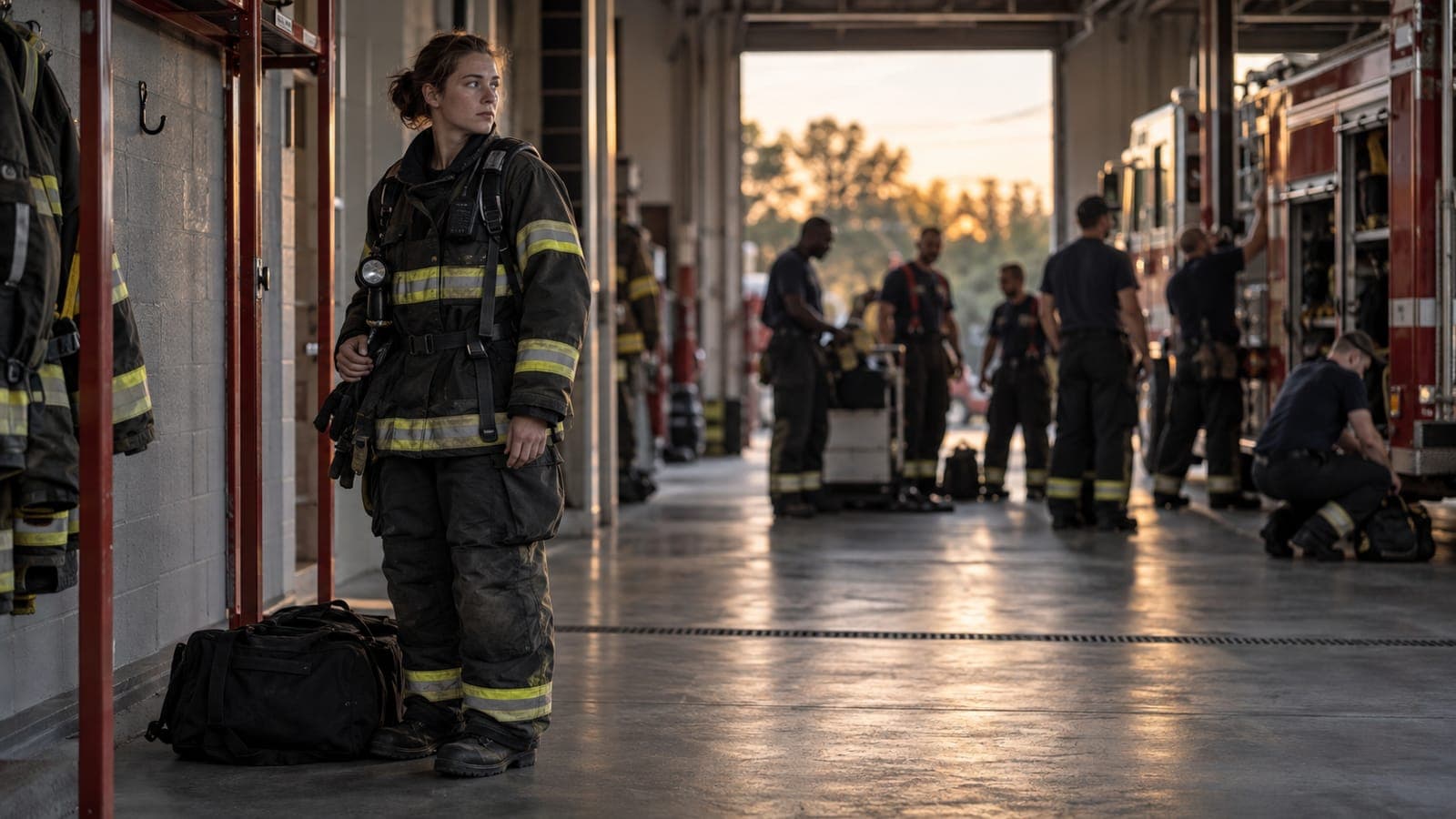
The department already has the material. It happened last week. It is in the run reports, the training log, the people who showed up for the shift nobody wanted to take. The job is not to manufacture a story. It is to notice the ones already there and tell them honestly.
Generic Recruitment Content Does Not Work Because It Is Not Specific
A recruitment ad that could belong to any department in the country persuades nobody in particular. It shows an apparatus, a uniform, a slogan about brotherhood or service, and asks someone to imagine themselves in it. That imagination gap is exactly where a good candidate loses interest and a bad candidate fills in the wrong expectations.
People do not join a department because of a slogan. They join because they can picture themselves doing the actual work, with actual people, in an actual place. The department that can show that picture clearly has an advantage the generic ad can never match, because the generic ad has nothing specific to show.
The Material Is Already There
Look at what happened in your department in the last month. A member completed a difficult certification. A crew handled a call that mattered to the person on the other end of it. A volunteer balanced a full-time job, a family and a stack of training hours to stay qualified. Someone mentored a new recruit through their first real call. A retiree marked forty years of service nobody outside the department will ever hear about unless someone decides to tell it.
None of that requires a marketing budget. It requires paying attention and being willing to ask someone to talk about it.
This is the same instinct that applies to earned media and to any story worth publishing: the real material is already happening. The job is capturing it before it disappears into an incident report nobody outside the department will ever read.
Show the People, Not Just the Mission
Public safety recruitment content leans hard on mission and duty, and both matter. But a prospective member deciding whether to give up their evenings and weekends is also asking a quieter question: what are the people like, and do I belong with them.
Let current members answer that in their own words. Why did they join. What almost made them quit. What kept them. What does a normal Tuesday actually look like, not the dramatic call that makes the news, but the ordinary shift that is most of what the job actually is.
Honest answers work better than polished ones. A volunteer who admits the first year was harder than expected, and explains what made it worth it anyway, is more persuasive than a scripted testimonial that sounds like it was written by someone else. Prospective members can tell the difference between a real answer and a marketing answer, and they trust the real one more.
Authentic Beats Polished, Especially With the Generation You Are Trying to Recruit
Departments recruiting younger members are often trying to reach people who grew up able to detect manufactured content instantly. A recruitment video that feels like a commercial gets scrolled past the same way any other ad does.
A short, honest clip of an actual member talking about an actual shift, filmed without a production budget, often performs better than an expensive polished piece, because it does not read as an advertisement. It reads as true. That is not a reason to abandon quality entirely. It is a reason to prioritize honesty over polish when you have to choose between them.
Capture It Consistently, Not Just When Recruitment Feels Urgent
The mistake most departments make is only thinking about recruitment content when a recruitment class is about to open, which means scrambling to produce something from nothing on a deadline.
Build a habit instead. Ask officers to flag a moment worth capturing after a significant call or a training milestone. Photograph and note real events as they happen rather than staging something later that will look staged, because it will be. Keep a simple running list, similar to a story pipeline for any other kind of communication: what happened, who was involved, what permissions are needed, and where it might be used.
By the time a recruitment push actually starts, the department should already have a backlog of real material to draw from, instead of starting from zero.
Protect Dignity While You Do It
Public safety stories often involve people on the worst day of their lives. Recruitment content should never treat a patient, a victim or a tragedy as a prop to make the department look good.
Focus on the members: their training, their commitment, their growth, their reasons for staying. When a call is part of the story, tell it with the same respect and restraint the department would want if the roles were reversed. The mission is compelling enough without exploiting the people the department serves to make that point.
This Is Not a One-Time Campaign
A recruitment video produced once and reused for three years goes stale, and everyone who sees it repeatedly starts to tune it out, including your own members who are asked to keep sharing it.
Treat recruiting storytelling the way a good story pipeline treats any other content: as an ongoing practice, not a project with an end date. New members join, new calls happen, new milestones get reached. Each one is a chance to add something current and real to what a prospective member sees before they ever fill out an application.
Start With What Already Happened This Week
You do not need a campaign to start. You need one real story, told honestly, about one real person in your department, and a habit of noticing the next one.
The department's actual work, done by actual people, already contains everything a generic recruitment ad is trying and failing to fake. Tell it well, tell it consistently, and let the truth do the recruiting the slogan never could.
Tools for this topic
Free interactive tools to put this into practice.
 AssessmentRecruitment Readiness Assessment
 CalculatorRecruitment Funnel Calculator
 Builder90-Day Onboarding Builder
 Part of the seriesRecruitment & RetentionExplore the series
 Recent posts
All posts →