We Built Something People Loved, and Still Failed
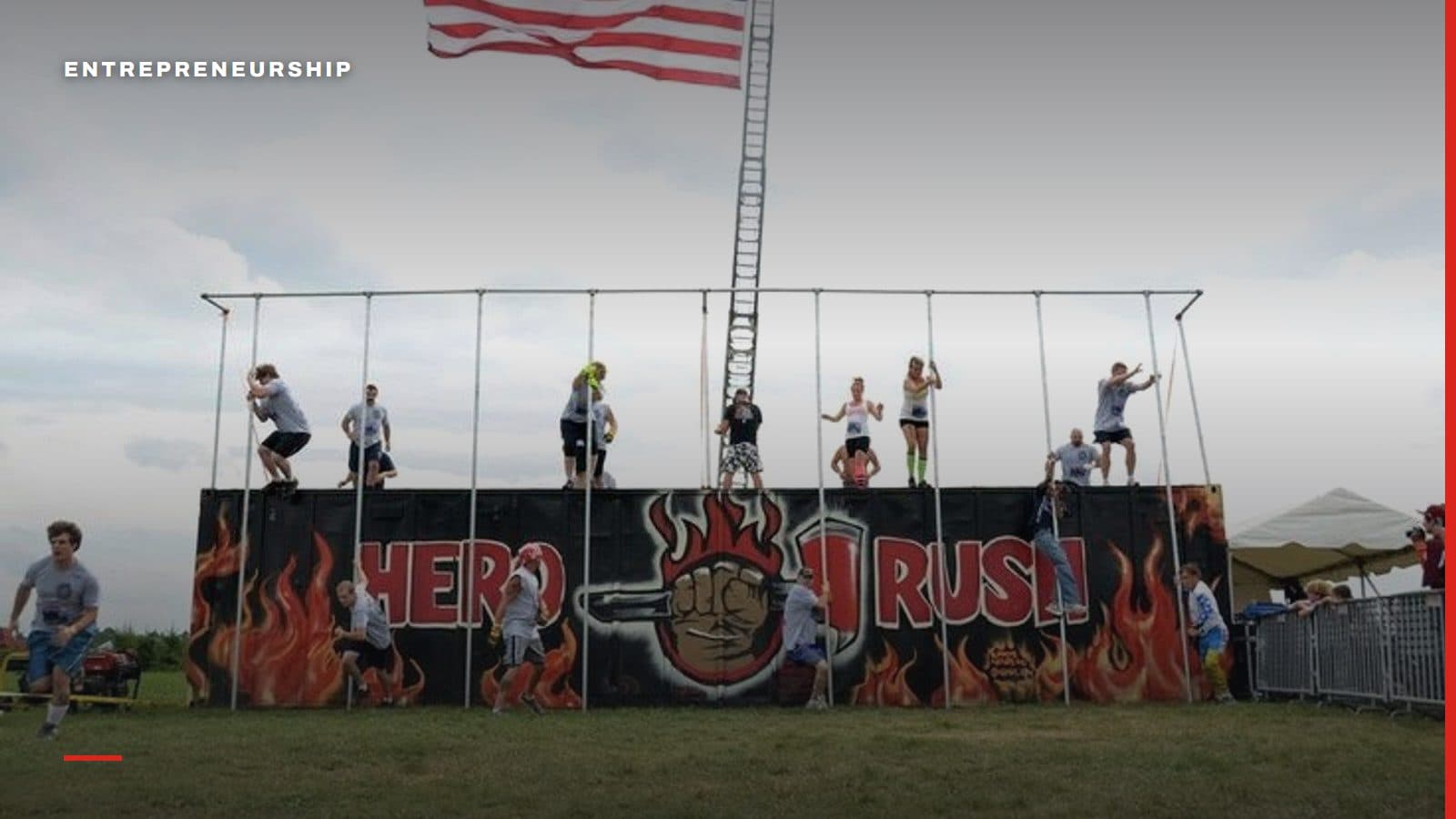
I have never written publicly about this before.
Part of that was embarrassment. Part was the pain we caused participants and partners who believed in us. Mostly, I wanted to move on from the lowest point of my business career, a failure that bled heavily into my personal life.
More than 13 years later, I can finally see Hero Rush for everything it was: a great idea, an exceptionally well-executed event, a business failure and one of the most valuable lessons of my life.
Something Genuinely Different
The idea for Hero Rush came from my business partner, Chris, during the obstacle-racing boom.
Instead of producing another generic mud run, we created a firefighter-themed race with challenges inspired by real emergency-response activities. Participants climbed ladders, broke through doors and windows, dragged hose, navigated smoke-filled spaces and rescued victims. Families came out, children had their own course and we supported firefighter charities.
The business grew quickly. We produced races across the country, received amazing reviews and developed passionate followers who traveled from event to event.
Men's Journal even selected Hero Rush as one of the seven best obstacle races in the country, alongside Warrior Dash, Rugged Maniac, Muddy Buddy, Spartan Race, Run For Your Lives and Tough Mudder. For a small company like ours, that was significant national recognition.
From an event-execution standpoint, Hero Rush was one of the biggest successes of our careers.
As a business, it became our biggest failure.
People Loved It. The Math Didn't.
The problem was painfully simple: we did not have enough participants.
These were expensive events to produce. Every city required a venue, equipment, transportation, staff, insurance, permits, marketing, shirts, medals and substantial setup costs before the first participant crossed the starting line.
We also became too reliant on Groupon and similar discounts. They helped fill the course, but we gave up badly needed revenue and trained customers to wait for the next deal instead of paying full price.
The events looked busy. The reviews were exceptional. Participants had an amazing time.
The math still did not work.
At the same time, the market became chaos: mud runs, zombie runs, color runs, glow runs and countless obstacle races chasing the same customers, sometimes in the same city on the same weekend. Dogs and cats living together.
Could serious funding, more focus and fewer distractions have kept us alive longer? Probably. But I now believe more money may simply have allowed us to lose more money for a longer period.
We had built an outstanding experience inside a business model that was falling apart.
Nearly Losing Everything
We did everything we could. We worked constantly, cut costs, pursued funding and invested more of our own money. For more than a year, we paid ourselves very little, and often nothing at all. This was not a contained business loss funded by someone else. It was our income, our savings and our personal financial security.
The money ran out anyway.
In August 2013, Hero Rush ceased operations and entered Chapter 7 bankruptcy. Future events were canceled. Our investments and savings were wiped out, bills followed us personally, and we came frighteningly close to losing everything.
What hurt most was knowing that dedicated participants and partners had trusted us. We had no ill intent, but we could no longer deliver what we had promised. That was a horrible experience for them, and it remains one of the most painful parts of the story.
We failed.
The Lowest Point
I had never been so low from a business standpoint, and it spilled into every part of my personal life.
One creditor continued calling and threatening me even though we had declared bankruptcy. During one especially bad conversation, I finally asked what he wanted from me. Did he want me to kill myself?
He called the police. They showed up at the hotel where we were staying.
I do not share that for drama or sympathy. I share it because that is how low things had gotten. I thought my career was over and did not know how I would recover financially, professionally or emotionally.
I also dreaded the bankruptcy hearing for months. In the end, it lasted about 10 minutes. Only one creditor appeared. After hearing how much we had invested, how hard we had worked and how much we had lost, that creditor told us they were sorry for what had happened.
The hearing ended. We walked out. And eventually, I had to get back up.
What Happened Next
After sleeping it off for a few weeks, I got up.
We still had other clients, including important names such as the National Fallen Firefighters Foundation, Paratech and ESPN. They did not erase all of our previous work because one business had failed.
Then, only a few months after I thought my career might be over, a magazine we had worked with went up for sale. We sought funding to make a bid and met with private-equity firms. We told them the complete Hero Rush story.
They knew we had failed. They also understood that failure was not necessarily the end. It was experience that, combined with our previous successes, could help us going forward.
They were willing to back our bid with tens of millions of dollars.
Only months earlier, I thought I was finished. Now serious investors who knew exactly what had happened were willing to make a very large bet on us. They could see something I could not yet see: one failure did not erase everything we had learned, built or accomplished.
We Were One of the First Dominoes
Hero Rush was small compared with the giants of obstacle racing. When we closed, it was easy to believe the larger companies had figured out a sustainable model that we had not.
History tells a different story.
There is a powerful irony in that Men's Journal list. Hero Rush and Run For Your Lives both disappeared in 2013. Warrior Dash, once one of the largest obstacle-race series in the world, eventually shut down. Tough Mudder's original company entered bankruptcy and the brand survived only after Spartan acquired it. Rugged Maniac eventually closed as well.
Even companies with millions of participants ultimately failed, closed or needed to be rescued. Some simply lasted a few years longer than we did.
That does not excuse our mistakes. We expanded too quickly, relied too heavily on discounts and kept believing that a great experience would eventually overcome the economics. But we were also among the first dominoes in a much broader industry collapse.
The Lessons
The biggest lesson was not simply "never fail again." Someone succeeding every time is not always a good thing. Some lessons have to be learned the hard way.
I learned that a great product and a sustainable business are not the same thing.
I learned to look harder at the math, even when customers love the idea. Growth is not success if every new customer or market creates even larger obligations.
Tools for this topic
Free interactive tools to put this into practice.
 AssessmentTechnology Continuity Risk Check
 BuilderTechnology Connection Mapper
 AssessmentTechnology Access Resilience Check
 Part of the seriesPublic Safety TechnologyExplore the series
 Recent posts
All posts →