Why Dashboards for Public Safety Agencies Work, and How We're Growing Them
It started with a simple idea at my own fire department.
Like departments everywhere, we regularly welcomed new members. But not everyone was at the station at the same time, and an email introduction could easily be missed or forgotten. I wanted to put new members on a television screen in the firehouse, showing their faces, sharing a little about them and helping everyone recognize the newest people joining our team.
That was it. No grand product roadmap. No plan to reinvent internal communications. Just a practical answer to a familiar firehouse problem.
But the idea stayed with me because it revealed something important: information works differently when it is placed directly in front of people as part of their everyday environment.
From an Idea to an Acquisition
I eventually discovered a company that was already doing something remarkably close to what I had imagined. Its Public Safety Information Network platform was placing useful information on screens inside fire and EMS stations.
In 2018, First Arriving acquired that platform. At the time, it served roughly 100 customers. We saw far more than digital signage. We saw the beginnings of an information system designed around how public-safety agencies actually work.
Today, we are approaching 1,500 agencies across 48 states and four Canadian provinces. That growth is gratifying, but the more interesting story is how the product itself has grown.
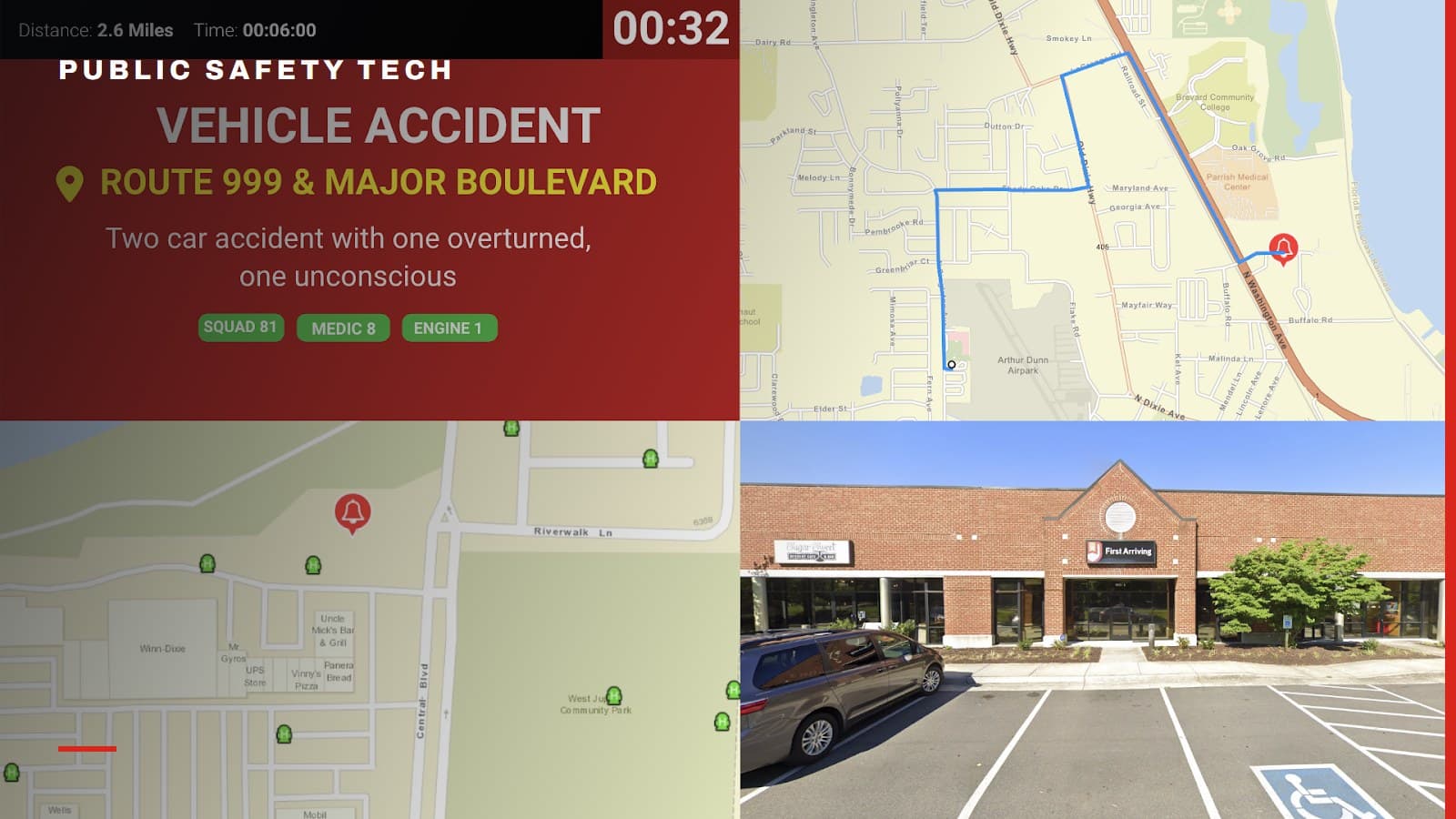
What began as information on a TV has evolved into a 360-degree internal communications and operational information platform, available on the big screen at the station, through a browser on the desktop and on mobile devices when personnel are on the go.
It is no longer just a screen. It is a way to put the right information in front of the right people, wherever they happen to be.
Why Dashboards Work
Public-safety agencies do not suffer from a lack of information. Most suffer from too much information in too many places.
CAD, RMS, staffing, scheduling, training, fleet, facilities, weather, traffic, GIS, email, shared documents and internal alerts may all contain something a person needs. The problem is that few people have the time, or the desire, to log into system after system, search inboxes and track down links simply to understand what is happening.
Dashboards work because they remove that chase.
They Make Important Information Unavoidable
A message buried in an inbox depends on someone opening it. A document inside a portal depends on someone remembering where it lives. Information on an always-visible station screen becomes part of the environment.
Personnel see the staffing picture, apparatus status, active incidents, training reminders, announcements and weather conditions as they move through their day. The information is present without requiring another login or another task.
That does not mean displaying everything. The real value comes from elevating what matters and reducing the noise around it.
They Create One Operational View
Different systems are usually good at the specific job they were built to perform. The challenge begins when an agency needs to see information from several of them at once.
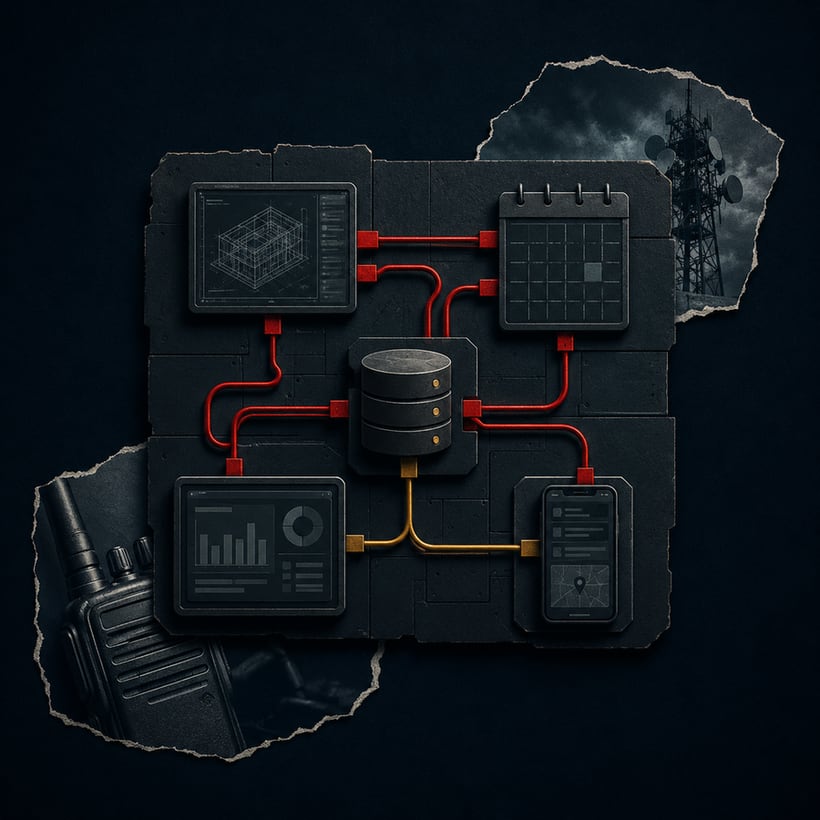
By connecting CAD, RMS, scheduling, staffing, fleet, training, GIS and other sources, a dashboard can create a unified view of the department. Instead of assembling the picture mentally from six applications, personnel and leaders can begin with a shared understanding of current conditions.
First Arriving now connects with more than 130 systems, allowing departments to bring live operational data and everyday internal communications together in views tailored to their needs. The current platform can surface incidents, rosters, unit status, equipment and maintenance information, certification deadlines, maps, weather, announcements, documents and other resources without trying to replace the source systems behind them.
They Reach Every Shift and Location
Internal communication in public safety is complicated by design. Personnel work different shifts, report to different stations and spend much of their time away from a desk. Volunteers may only be in the building at certain times. Leadership, field personnel and administrative staff may each need a different view of the same organization.
A dashboard helps maintain continuity across those boundaries. Information can be shared simultaneously across station displays while being filtered by location, assignment or role. Everyone can work from the same underlying information without every screen having to look identical.
That shared visibility becomes especially valuable during shift changes, multi-station operations, major incidents and interagency coordination.
They Connect Operations With Culture
The new-member idea that started this journey still matters.
Mission-critical information will always come first, but a department is more than its incident data. Birthdays, promotions, retirements, awards, training achievements, community events and new-member introductions all help create connection.
The same platform that communicates apparatus status or a severe-weather alert can recognize a member's accomplishment and remind everyone about an upcoming family event. That mix of operational awareness and human connection makes the dashboard part of the organization rather than another disconnected technology product.
They Save Time and Help People Act
Every manually updated whiteboard, repeated email and separately assembled shift report consumes time. Connecting information directly to its source reduces duplication and helps keep it current.
Dashboards can also do more than passively display information. Alerts can elevate urgent items. Required acknowledgments can help confirm that an important policy or message was seen. Document libraries and key links can put frequently needed resources one click away.
The goal is not more technology. The goal is less friction between a person and the information or action they need.
Beyond the TV on the Wall
The wall-mounted screen remains powerful because it provides persistent, shared visibility. But it cannot be the only destination.
Personnel move. Officers leave the squad room. Fire and EMS crews work across stations, apparatus, training grounds and incident scenes. Chiefs and supervisors need access from offices, meetings and home. Information must follow the people who depend on it.
That is why we are building toward a full-circle experience:
- Big screens provide an always-on shared view in stations, bays, squad rooms, communications centers and other facilities.
- Desktop and web dashboards give chiefs, supervisors, administrators and analysts deeper access wherever they work.
- Mobile access keeps personnel connected to core information, announcements, equipment updates, weather, documents and resources while they are away from the building.
The objective is consistency without sameness. A firefighter looking at a station screen, a chief opening a browser and a member checking a phone may need different levels of detail, but all should be drawing from the same trusted sources.
Where We Are Going
We are continuing to expand the platform beyond traditional digital signage and toward a complete, department-specific information hub.
That means deeper integrations, better automation, smarter prioritization and more personalized views. It means helping an agency turn disconnected data into useful context, not merely putting more numbers on a screen. It also means making documents, links, communications and actions easier to find and complete.
The most important test is still the same one behind that first idea at my firehouse: Will this help people know what they need to know?
If the platform can help a new member feel recognized, a crew arrive better prepared, a supervisor spot a problem sooner or an entire department stay aligned across shifts and stations, it is doing meaningful work.
Clarity Where It Matters Most
Public-safety personnel should not have to hunt through a maze of systems to find information that affects readiness, safety and performance. They should not miss an important update simply because it arrived in the wrong inbox at the wrong time.
Dashboards work because they make information visible, timely and useful. They bring operations and communication together. And when they extend from the station wall to the desktop and mobile device, they become something much larger: a common information environment for the entire agency.
What started as an idea for introducing new members on a firehouse television has grown far beyond anything I imagined at the time. Nearly 1,500 agencies later, we are still building, and still working toward the same outcome: putting mission-critical information in front of the people who need it most.
Tools for this topic
Free interactive tools to put this into practice.
 AssessmentTechnology Continuity Risk Check
 BuilderTechnology Connection Mapper
 AssessmentTechnology Access Resilience Check
 Part of the seriesPublic Safety TechnologyExplore the series
 Recent posts
All posts →