Public Safety Doesn’t Need More Disconnected Software. It Needs Platforms That Work Together.
Most public safety agencies are not suffering from a shortage of software.
They have CAD, records, scheduling, training, payroll, personnel, email, messaging, documents, fleet management and reporting systems. Many of those products are useful. Some are essential.
Too few work together in a way that reflects how the agency actually operates.
The result is duplicate entry, conflicting records and employees who become the human integration between products. Someone exports a file, cleans it, copies information into a spreadsheet and sends it to another person who enters it somewhere else. That process may happen every day without leadership recognizing it as a technology problem.
The next purchase often adds another system to the collection. Before buying more technology, agencies should ask whether better connections could create more value from what they already have.
One Fact, Entered Several Times
A rank change may need to be updated in personnel records, scheduling, email groups, permissions and station lists. Incident participation may be recorded in one system and reentered for LOSAP or payroll.
The department may maintain one official roster, but the training officer, scheduler and quartermaster each keep separate copies because their systems do not share the same information. Over time, none of the copies agrees completely with the others.
Every duplicate step consumes time and creates another opportunity for error. The cost is not limited to administration. Outdated qualifications can affect scheduling. Incorrect contact groups can leave members out of important communication. Inconsistent apparatus status can create operational confusion.
Look for the facts that appear in several workflows:
- Member identity, rank, role and status
- Certifications and qualifications
- Station or unit assignment
- Incident participation
- Scheduling and availability
- Apparatus and equipment status
- Training attendance
- Issued property
Each should have an authoritative source. Other systems should receive or reference that information rather than create unrelated copies.
Find the Human Integrations
Every agency has people who quietly keep disconnected systems functioning.
They know which report to export, which columns to delete and which names never match. They remember to update the distribution group after a promotion and reconcile the training spreadsheet before annual reporting. Their work is valuable, but the dependency is risky.
When that person is unavailable, transfers or retires, the organization discovers that the integration was never software. It was institutional knowledge held by one employee or member.
Map the manual handoffs. Ask where information is copied, reentered, emailed, downloaded or reconciled. Estimate how often the work occurs and what happens if it is missed.
The most important integration opportunities are not always the most technically impressive. Automatically carrying an approved certification into scheduling eligibility may create more value than a complicated executive dashboard.
Integration Should Follow the Workflow
An integration is valuable when it removes a real handoff. Start by asking what information begins in one system and which downstream process needs it.
For every proposed connection, define:
- The authoritative source
- Information being exchanged
- Direction of the data
- Update frequency
- Matching rules
- Permissions
- Failure monitoring
- Responsible vendor or internal owner
The goal is not to connect everything merely because APIs exist. It is to ensure that authoritative information reaches the people and tools that depend on it.
A one-way connection may be appropriate when the source system remains in control. Two-way synchronization can be useful, but it creates more questions about conflicts, approvals and which change wins.
Start with the workflow, then select the technical method. API, webhook, scheduled file and manual import are different tools. The most advanced option is not automatically the best if the source updates only once a month.
“Integrates With” Is Not Enough
Vendors often say their products integrate, but that can mean very different things.
The connection may exchange only a few fields. It may require a third-party service, additional fee or custom project. It may update once a day when the agency expects real-time information. It may exist for one product version but not another.
Ask the vendor to show what works today. Identify the source and destination, data exchanged, timing, setup responsibility, error handling and support process.
Also ask who notices when the connection fails. A successful setup is not the same as a monitored integration. Credentials expire, APIs change, records stop matching and third-party systems experience outages.
An integration without monitoring can quietly create the same inaccurate information it was intended to eliminate.
Dashboards Can Become a Communication Layer
Agencies often need a shared view across systems without replacing them. Dashboards can bring selected CAD, staffing, training, fleet and organizational information into one operational view.
A station dashboard might combine the current shift, apparatus status, expiring certifications, announcements, weather and recent incident activity. Leadership may need a different view of staffing, participation, training, recruitment and fleet trends.
That shared layer can reduce the need for people to open several applications simply to understand current conditions. It can also help information reach personnel who may not use every underlying system.
The dashboard should respect permissions and data sensitivity. Consolidation does not mean exposing everything to everyone. Patient information, personnel details, security information and administrative records require appropriate limits.
A dashboard is also not a substitute for correcting bad source data. It can make inconsistencies more visible, but it cannot decide which underlying record is correct.
Connect Communication to the Underlying Work
Agencies often treat messaging as a separate system even when the message is created by an operational event.
A staffing shortage may require notifying qualified members. A failed apparatus inspection may need to alert the fleet manager and mark the unit out of service. A certification approaching expiration may require a member reminder and officer escalation.
When systems are connected, communication can reach the right people with the context needed to act. When they are not, an administrator builds another list, writes another message and hopes every change was included.
Do not automate every notification. Too many alerts create noise. Connect messages to defined responsibility, urgency and escalation so recipients understand why they received them and what they should do.
Demand Portability and Documented Connections
Ask vendors what data can be exported, which APIs are available, how frequently integrations update and who supports failures.
The agency should understand:
- Which systems are connected
- What credentials or service accounts are used
- Who owns each connection
- Where failures are reported
- Which vendor provides support
- What costs apply
- How the connection is tested
- What happens when the contract ends
Connections built on one employee's personal credentials or an undocumented workaround create a new single point of failure. Use department-controlled accounts, secure credential storage, multifactor authentication and more than one authorized administrator.
Require usable export of records, attachments and history. Portability matters not only when changing vendors, but when building a new integration, answering an unexpected reporting request or recovering from a service problem.
Documentation should be understandable to someone who did not build the original connection.
Better Connected Does Not Mean One Vendor Owns Everything
An all-in-one platform may simplify common workflows. Specialized systems may remain best for certain operational functions.
The choice is not simply one platform versus many products. An all-in-one platform can still contain disconnected modules. A group of specialized products can work well when identity, data and support responsibilities are clearly connected.
Evaluate the complete operating environment:
- Does information recorded once reach the workflows that need it?
- Can users move between systems without separate identities and repeated entry?
- Are permissions consistent?
- Can the agency see when a connection fails?
- Do vendors accept responsibility for supporting the integration?
- Can the department change one component without losing its information?
The real standard should be whether the combination serves the agency without forcing people to reassemble the organization by hand.
Do Not Add Another Silo
Before purchasing a standalone tool, map how it will fit with the systems already in place.
Ask what information the new product needs, where that information currently lives and what systems will need its output. Include integration, administration, authentication, reporting and export in the buying decision.
A product may solve one problem while creating three new administrative tasks. The demonstration should include the handoffs, not only the isolated feature.
Sometimes the right answer is a new platform. Sometimes it is an integration, configuration change or better use of a capability the agency already owns. The decision should begin with the operational workflow rather than the desire to add another product.
Connection Is an Operating Discipline
Better-connected technology requires continuing ownership.
Review integration health, permissions, credentials, data quality and vendor responsibility regularly. Document changes. Test critical exports and recovery. Include connections in implementation and renewal discussions.
Technology should reduce the burden on the people doing the work. When employees and members remain responsible for carrying information between systems, the agency has not completed the connection.
Before purchasing another standalone tool, determine whether the agency can get more value by connecting what it already has.
For a broader operational framework, read the Guide to Organizing and Managing a Fire Department with Online Tools.
Related guides
Go deeper on this topic.
Tools for this topic
Free interactive tools to put this into practice.
 AssessmentTechnology Continuity Risk Check
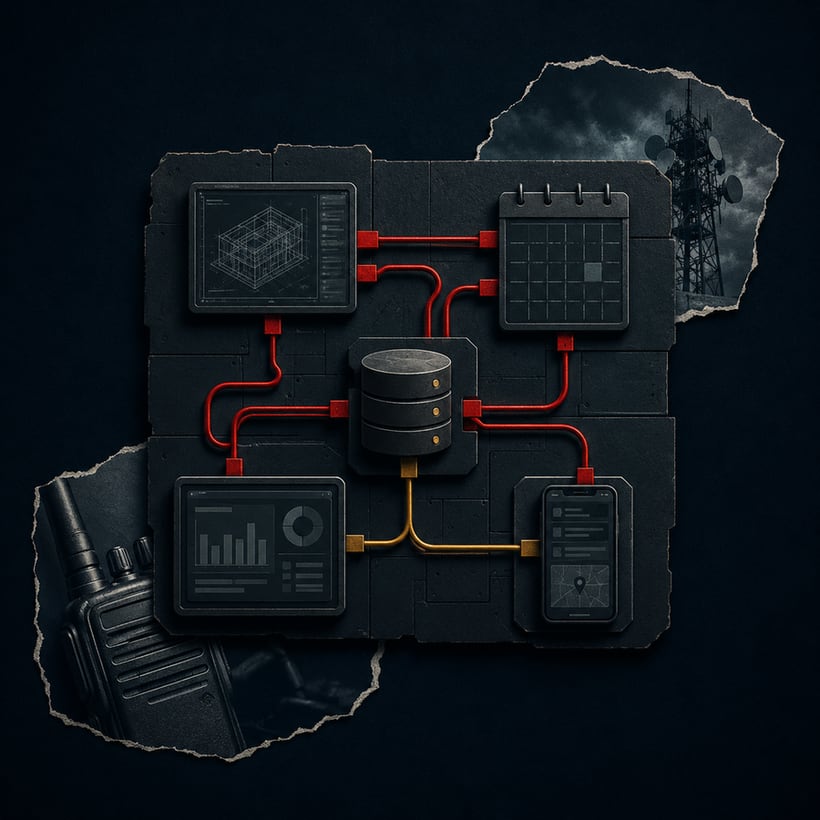 BuilderTechnology Connection Mapper
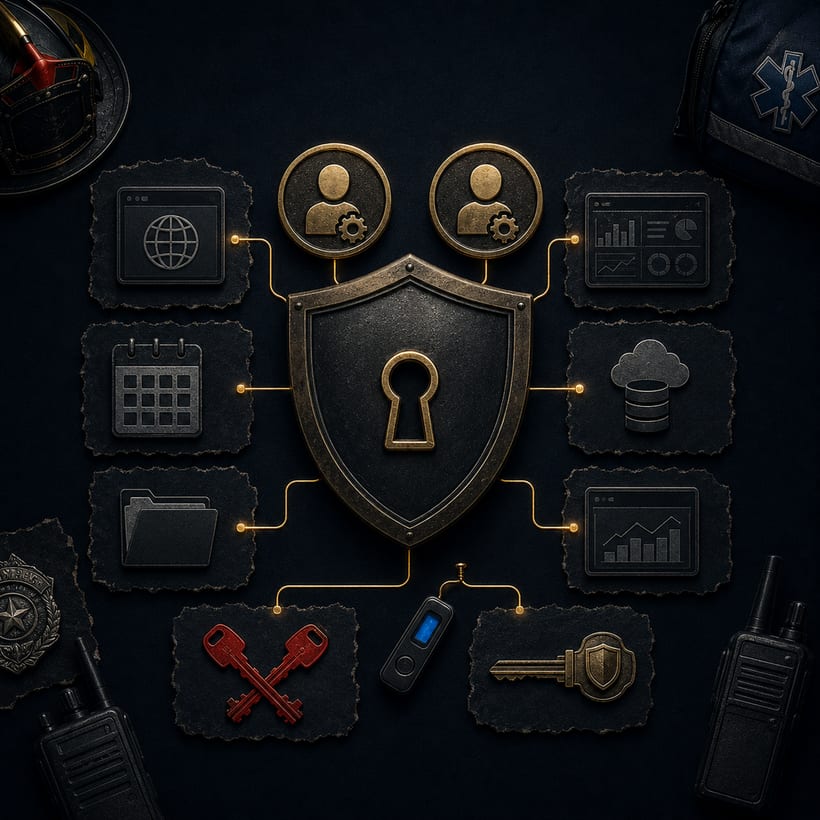 AssessmentTechnology Access Resilience Check
 Part of the seriesPublic Safety TechnologyExplore the series
 Recent posts
All posts →