Your Membership Spreadsheet Is Not a Member-Management System
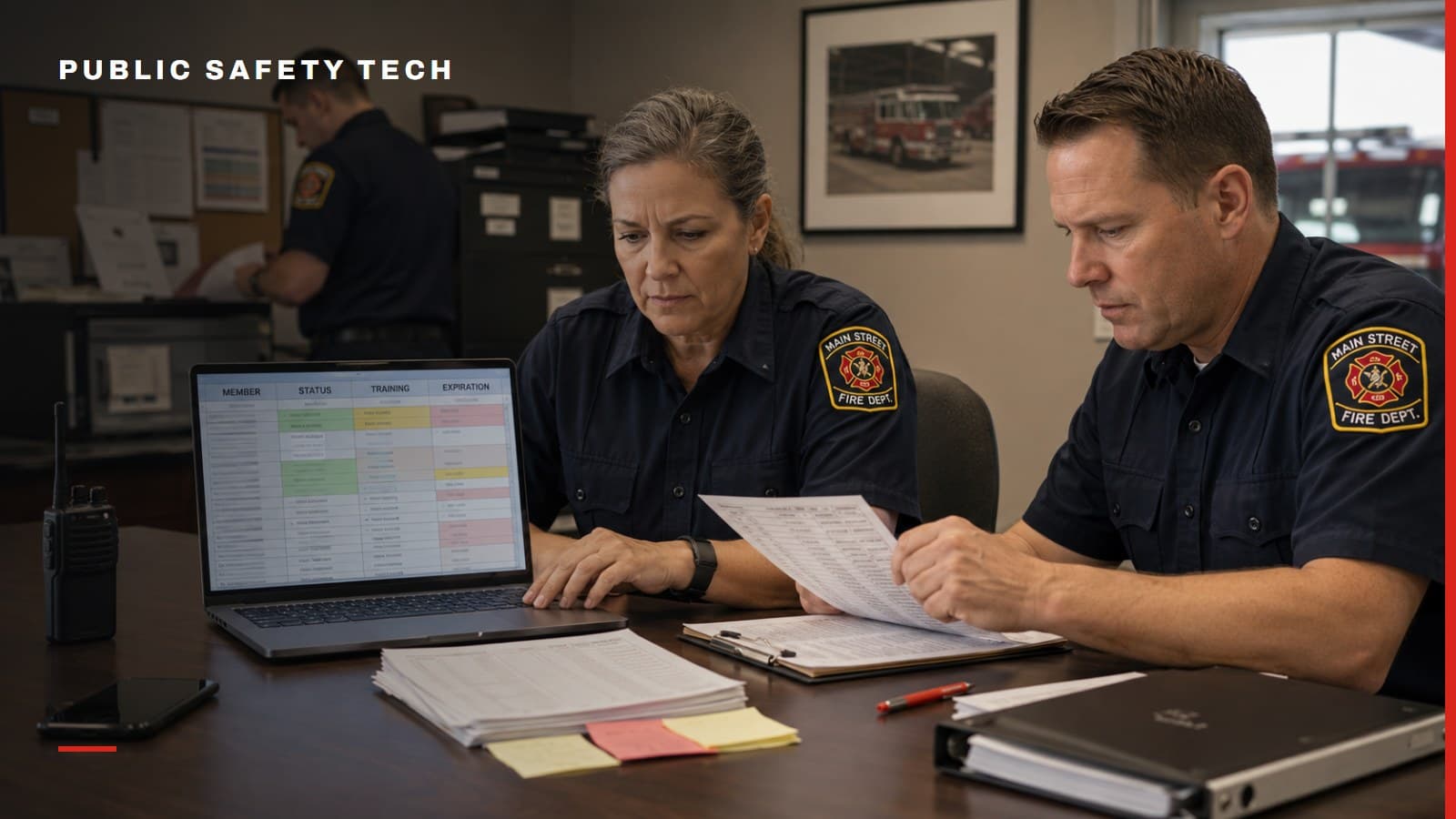
Spreadsheets are one of the most useful tools ever created. They are flexible, familiar and available to almost every department.
They are also carrying far more responsibility inside many fire and EMS organizations than they were ever designed to handle.
One spreadsheet tracks the roster. Another contains certifications. Someone else maintains LOSAP points, while training progressions live in a separate workbook or paper binder. Gear assignments may be in a file on one officer's computer. Prospective members are tracked in email, if they are tracked at all.
Each file may work reasonably well by itself. The problem appears when the department needs all of them to work together.
A List Is Not a Workflow
A spreadsheet can show that an EMT certification expires on a certain date. It does not automatically create a renewal process, notify the member, request documentation, send the submission to an officer for approval and record who accepted it.
It can list a new member's required onboarding steps. It does not assign a mentor, connect documents, capture acknowledgments, track issued equipment and show the member what remains incomplete.
It can total LOSAP points. It does not necessarily collect activity once and apply the correct credit to participation, incentives and reports without duplicate entry.
Modern member management is not simply about storing data. It is about moving people and information through repeatable processes.
Disconnected Files Create Conflicting Truths
When several people maintain separate files, the department eventually develops several versions of the same member.
The secretary's roster shows one address. The training officer has another. The member updated a phone number somewhere, but nobody knows which file received it. A rank change appears in meeting minutes but never reaches the scheduling or permissions list.
A member-management platform should provide one authoritative profile that feeds the rest of the system. Rank, status, role, station assignment and contact information should not have to be corrected in five places.
Spreadsheets Depend on People Remembering
Many spreadsheet processes work because one dedicated person knows what to check.
That person remembers which certifications are approaching expiration, which members need a reminder, which formulas should never be changed and which tab contains the current data. The department may not realize how much institutional knowledge lives in one person's head until that person retires, transfers, becomes unavailable or simply stops maintaining the file.
A dependable system should create reminders, assignments and escalation paths. It should document changes and make responsibility visible to more than one authorized administrator.
Privacy Becomes Difficult to Control
Membership records may include dates of birth, emergency contacts, license numbers, medical information, background documents and other sensitive data.
Spreadsheets are often shared too broadly because someone needs access to one column or one tab. Copies are downloaded, emailed and stored on personal devices. Even when the original file is protected, the department may have little control over all the copies.
A member-management platform should support role-based and field-level permissions, audit history, secure storage and immediate removal of access when responsibilities change.
Members Expect Self-Service
Members should be able to update appropriate profile information, upload a renewed certification, see training progress, sign up for a shift, respond to an event and review assigned documents from a phone.
If every change requires an officer to update a spreadsheet, administrative work grows and information stays outdated.
Self-service does not mean giving everyone unrestricted access. It means allowing members to complete approved tasks while leadership retains review and control.
Reporting Should Not Require Rebuilding the Department
Leadership, municipal officials, boards and grant reviewers routinely need information about staffing, participation, response, training and retention.
When data is spread across files, every report becomes a manual project. Someone must combine records, reconcile names, remove duplicates and explain why the totals do not match.
A connected platform should allow activity recorded once to feed the appropriate member history, LOSAP calculation, participation trend and report.
The Spreadsheet Does Not Need to Disappear
This is not an argument to eliminate spreadsheets. They remain excellent for analysis, temporary planning and exported data.
The distinction is responsibility. A spreadsheet can support the department without serving as the primary system responsible for member identity, permissions, compliance, progression and institutional history.
Departments should be able to export their information to CSV or Excel whenever needed. They simply should not have to reconstruct their entire membership from those files every time someone asks a question.
Know When You Have Outgrown the Current Process
Common warning signs include:
- The same member information exists in several files
- Only one person understands how the process works
- Certifications expire without advance notice
- Applicants or new members disappear during follow-up
- LOSAP and participation require duplicate entry
- Sensitive files are shared more broadly than necessary
- Reports take days to assemble
- Members cannot see or update their own information
- Leadership cannot easily tell what is incomplete
- A change in rank, role or status does not reach every related process
The answer is not simply to purchase software. The department should first define what it needs to manage, which workflows must connect and how access should be controlled.
Then it can evaluate whether a platform provides one real source of truth or merely replaces several spreadsheets with several disconnected screens.
For a complete evaluation framework, read The Top 20 Tools to Look for in a Fire Service Member-Management Platform.
Tools for this topic
Free interactive tools to put this into practice.
 AssessmentTechnology Continuity Risk Check
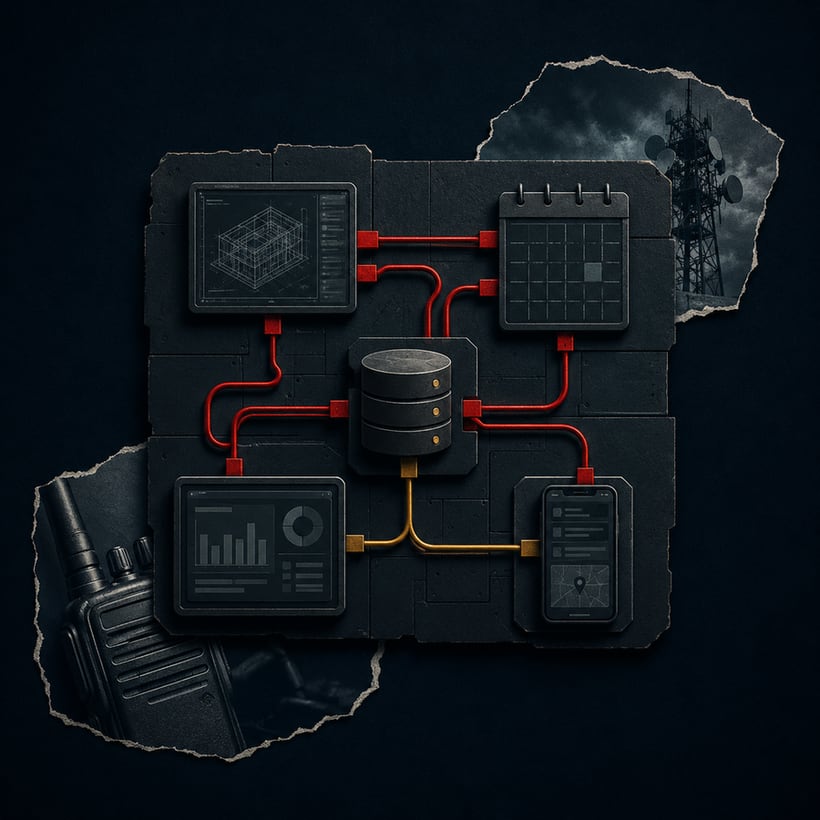 BuilderTechnology Connection Mapper
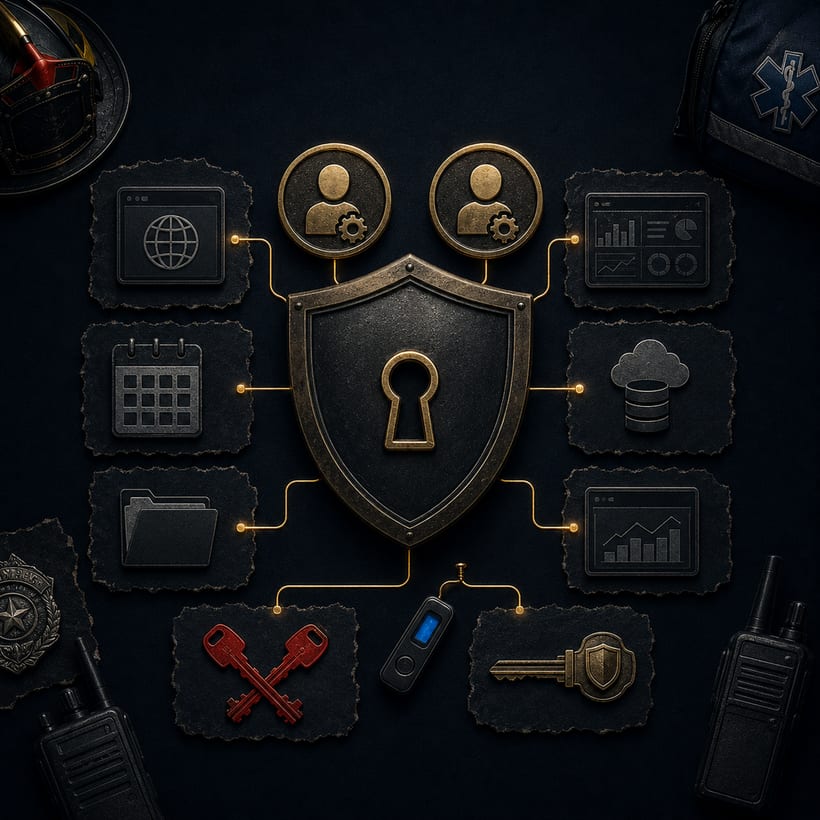 AssessmentTechnology Access Resilience Check
 Part of the seriesPublic Safety TechnologyExplore the series
 Recent posts
All posts →